


ATLAS:EARTH: Collect Places
4.527.19K Reviews
App Specs
- Version
- 1.96.12
- Updated On
- License
- Free
- Downloads
- 5,000,000+
- Developer
- Atlas Reality, Inc.
- Categories
- Finance
- Platform
- Android, iOS
Screenshots

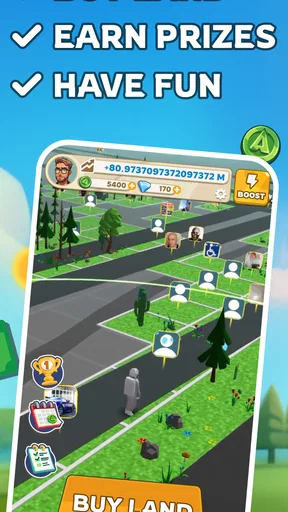

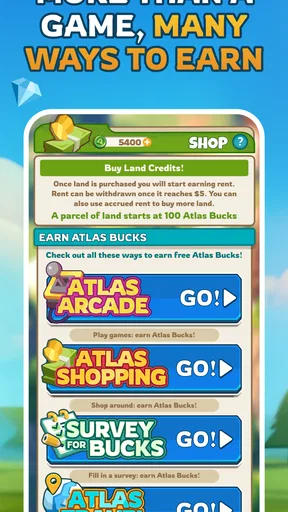
 Analysis by AppCompare
I approached ATLAS:EARTH as a finance app with a game layered over the top, and that distinction matters. It is not a budgeting tool, a banking replacement, or a conventional cashback service. The central idea is to collect digital land, receive rent from owned parcels, and use selected shopping activity to earn cashback. In my experience, its appeal comes from turning small financial rewards into something visible and playful rather than leaving them as an abstract balance.
That makes it unusually easy to understand and unusually easy to misunderstand. If you want dependable income, this is the wrong expectation. If you enjoy checking a map, making gradual progress, and treating rewards as a long-running hobby, the format is much more interesting. I found the best way to use it was to think of it as a light financial game whose rewards are a bonus, not as an investment product promising meaningful returns.
How the digital-land idea works in everyday use
The first thing that separates this app from ordinary finance software is the sense of place. Instead of only watching numbers rise, I am encouraged to think about virtual ownership and where that ownership sits. The map-based approach gives routine check-ins a purpose: I am not merely opening an account screen, but returning to a digital world that can gradually become a personal collection.
The basic loop is deliberately approachable. I can look for available land, claim or manage digital property through the app, and monitor the rent associated with what I own. The process feels closer to collecting than to managing a real property portfolio. That is a strength because it lowers the barrier for people who would never spend time learning an actual investment platform.
The rent concept also gives the app a useful sense of continuity. A conventional cashback app often asks me to remember a promotion, complete a purchase, and then wait for a balance update. Here, the digital-land side gives me a reason to return even when I am not shopping. The reward is not necessarily large, but the ongoing collection loop makes progress easier to notice.
I would still keep the language around “owning” in perspective. This is ownership inside the app’s game economy, not a deed, a real estate holding, or a substitute for savings. That distinction should be clear before spending anything. The entertaining part is the virtual layer; the financial value should be treated cautiously and evaluated through actual results over time.
A practical routine that avoids turning it into a chore
My preferred routine is simple: check the map when I naturally have a spare minute, review available reward opportunities before making a purchase I already planned, and avoid buying something solely to chase a reward. That last rule is important. Cashback only helps when it is attached to spending I would have done anyway. Otherwise, the game can quietly encourage unnecessary consumption.
Worth Reading Before You Choose

EA SPORTS FC Mobile 26 Is a Bigger Football Game, but It Takes Time

Flipboard Shows What News Apps Must Do Beyond the Feed

Switching to Android Auto Means Rethinking Your Driving Routine

Google Calendar Makes a Crowded Week Easier to Manage

Ludo King Makes the Most of the Minutes Between Plans

Baby Panda World Brings Quick Play to Modern Phones, but Its Game Library Feels Busy
A realistic example would be someone commuting through the same town each week. They might open the app during a break, explore nearby digital land, and gradually build a collection around familiar places. Later, when planning an eligible purchase, they can check whether the cashback side offers a worthwhile route. The app then becomes a small habit connected to an existing routine instead of another demanding task.
This workflow also reveals one of the app’s less obvious strengths: it combines two different motivations. The map and land provide a collecting goal, while cashback gives shopping activity a practical angle. Users who enjoy only one of those ideas may find the other distracting, but people who like both get more reason to return than they would from a single-purpose reward app.
What the cashback side is good at—and where caution helps
The cashback feature is most useful when it changes where I complete a planned purchase without changing what I buy. I would compare the final reward with the price, delivery terms, and convenience of the usual retailer rather than assuming the highest advertised percentage is automatically the best deal. A reward is not a saving if it leads to a more expensive purchase.
I also recommend treating every offer as something to inspect carefully before acting. The important details are usually the qualifying route, the timing, and any conditions attached to the reward. A casual tap followed by a purchase elsewhere may not produce the result I expected. This is not a criticism unique to this app, but the playful presentation can make the shopping decision feel less serious than it is.
Another useful habit is to keep personal records of meaningful purchases until the reward appears in the account. I would not do this for every tiny transaction, but it can help when a larger purchase is involved or when the timing of a reward matters. That simple record also makes it easier to judge whether the cashback feature is genuinely useful for me instead of relying on the excitement of individual offers.
The app is free to install, but it includes in-app purchases ranging from $1.99 to $399.99 per item. That range changes the way I would approach the game. New users should begin without paying, learn how the land and reward systems fit together, and only then decide whether optional spending adds enjoyment. I would never treat a purchase as a sensible financial decision merely because it might improve progress inside a virtual economy.
The strongest reason to keep using it
For me, the strongest case is motivation. Traditional personal-finance tools often depend on discipline: record expenses, review categories, and remember long-term goals. Those actions can be valuable but dull. This app gives progress a visual and collectible form, which may help users who lose interest when rewards are represented only by a number in a spreadsheet.
The game layer can also make small rewards feel more tangible. Seeing a growing collection of digital land is emotionally different from seeing a few cents added to a generic cashback balance. That does not make the reward economically larger, but it can make the habit more memorable. In behavioral terms, the app is better at creating a reason to return than many plain reward dashboards.
Its audience size supports that appeal. The app has passed five million installs, carries an average rating of 4.3 from around 296 thousand ratings, and has accumulated roughly 26 thousand written reviews. I read those figures as evidence of broad interest rather than proof that every user will find the economics compelling. A large community can make a game feel more alive, but it does not remove the need to understand the rules or manage expectations.
The meaningful weakness: progress can blur into spending pressure
The biggest weakness is the tension between playful progression and financial judgment. When an app presents land, rent, and purchases as parts of one engaging loop, it can become tempting to spend for momentum. That is where I think users need the most self-control. The free entry point is welcoming, but the presence of high-priced optional items means the experience can become expensive if collecting turns competitive or emotionally urgent.
I also found that the reward experience is better suited to patient users than to anyone seeking immediate, predictable value. Digital rent and cashback are appealing concepts, but neither should be confused with a regular paycheck. Results depend on how actively I use the app, what opportunities are available to me, and whether I make purchases that genuinely fit my needs.
There is a second kind of friction: the app asks me to care about a virtual map. That is its identity, but it is also its limitation. Someone who wants a clean list of cashback offers may consider the land system unnecessary. Someone who wants serious financial planning will find the game mechanics too lightweight. The same feature that makes the app distinctive can make it feel unfocused to users with a narrow goal.
The Mature 17+ rating is another reason I would approach it thoughtfully, especially if a younger family member is interested. The combination of financial language, optional purchases, and a reward-driven game loop deserves adult judgment. I would not hand it to a teenager without discussing spending limits and the difference between entertainment value and actual financial gain.
How it compares with ordinary alternatives
Compared with a standard cashback app, this one is more interactive and more persistent. A conventional service usually wins when I want a quick path from offer to rebate with as little distraction as possible. ATLAS:EARTH wins when I enjoy collecting, checking a map, and building a longer-running digital project around the rewards.
Compared with a budgeting app, the difference is even greater. A budget tool helps me understand income, bills, categories, and spending decisions. This app does not replace that structure. I would use a budget for financial control and this app for optional rewards and entertainment. Trying to make the latter perform the former’s job would lead to poor decisions.
Compared with a location-based game, its financial theme gives the collecting loop a practical flavor, but it also raises the standard for transparency and restraint. In a purely decorative game, spending is entertainment. Here, the presence of rent and cashback can make spending feel financially justified even when the entertainment is the real reason. That is why I prefer to evaluate purchases as game spending first, with any reward treated as secondary.
There is also a difference in patience. A typical shopping-reward service may be useful after one purchase. This app makes more sense over repeated use, because the land collection and ongoing rent are part of the motivation. If I know I will open it once and forget it, a simpler cashback option is probably a better fit.
Who will enjoy it most
I would recommend it to people who like map-based collecting, incremental progress, and small reward systems. It is particularly suitable for someone who wants a more engaging alternative to a plain cashback balance and is comfortable treating the experience as a hobby. The free starting point makes it easy to explore before deciding whether the concept holds attention.
It may also work well for users who have regular shopping routines and are willing to check offers before purchasing. The key is that the app should fit around existing spending. Used that way, the cashback feature can add a little value without dictating what I buy. The land side then supplies the entertainment between shopping opportunities.
I would skip it if my priority is reliable income, detailed financial planning, or frictionless rebates. I would also avoid it if virtual ownership does not interest me, because the map and collection elements are not a minor decoration; they are central to the experience. Users who are easily drawn into optional purchases should set a firm budget before exploring the app.
What I would check before committing time or money
First, I would use the free version long enough to understand the basic rhythm. I would learn how often I naturally return, whether the map feels enjoyable, and whether the available cashback opportunities match my normal shopping. There is no reason to buy optional items before answering those questions.
Second, I would separate three things in my mind: entertainment, digital rent, and shopping cashback. They may appear in the same app, but they serve different purposes. Digital rent belongs to the game loop, cashback belongs to qualifying purchases, and entertainment is the reason I might continue. Keeping those categories separate prevents a virtual milestone from being mistaken for a financial necessity.
Third, I would judge the app by net benefit rather than headline excitement. That means considering time spent, purchases made, optional spending, and the actual usefulness of rewards. A small return can still be worthwhile if the app is fun and costs nothing extra, while a larger-looking reward can be poor value if it encourages purchases I did not need.
On the technical side, the current version is 1.91.37 and the app supports Android 8.0 or later. That makes it accessible to many Android users without requiring a recent handset. Atlas Reality, Inc. is the developer, and the app is available free of charge at entry, with the optional purchase range worth remembering before handing over payment details.
My final judgment
After spending time with it, I see ATLAS:EARTH as a clever hybrid rather than a serious finance solution. Its best idea is not that digital land will transform my finances, but that a game can make small rewards and repeated habits more engaging. The map gives the experience personality, while cashback provides a practical reason to pay attention to selected shopping opportunities.
Its limitations are equally important. The rewards should not be treated as dependable earnings, the virtual property should not be mistaken for real-world ownership, and optional purchases can undermine the value proposition if I stop treating them as entertainment spending. The app asks for patience and self-control, especially from users who enjoy collecting and progression.
My recommendation is straightforward: try it as a free, low-pressure hobby, not as an investment plan. If you enjoy the map, return naturally, and use cashback only for purchases you already intended to make, it can be a distinctive and enjoyable addition to your phone. If you want precise budgeting, dependable returns, or the simplest possible rebate process, a conventional finance or cashback app will serve you better.
For the right person, the combination is genuinely appealing: a digital collection to build, a reason to check in, and the possibility of earning small rewards along the way. For everyone else, the game layer may be more distraction than benefit. That clear split is why I would recommend exploring it without spending first, then deciding based on how it fits your real habits rather than how exciting the virtual economy looks.
Pros
- Earn virtual land and rewards by checking in at real-world locations.
- Simple map-based gameplay is easy for casual users to understand.
- Frequent events can provide extra chances to collect in-game currency.
- Social features let players compare progress and interact with nearby users.
- Available on mobile devices for convenient play while exploring new places.
Cons
- Rewards and land value depend heavily on the app’s changing economy.
- Regular progress may require frequent visits to physical locations.
- Some features and bonuses can encourage in-app purchases.
- GPS accuracy and connectivity affect check-ins and gameplay reliability.
- Cashback availability and redemption terms may vary by region.
FAQs for ATLAS:EARTH: Collect Places
What is ATLAS:EARTH – Fun Cashback?
ATLAS:EARTH – Fun Cashback is a location-based mobile game that lets players explore a digital version of the real world and collect virtual land parcels. As you acquire more property, you may receive in-game rewards and participate in the app’s virtual economy. The experience combines map exploration, collecting, progression, and optional social or competitive features, making it more interactive than a standard cashback or rewards application.
How does the cashback and rewards system work?
The app’s rewards system is connected to the virtual properties and activities available inside the ATLAS:EARTH ecosystem. Players can collect parcels, build their virtual portfolio, and potentially earn rewards according to the game’s current rules and eligibility requirements. Returns are not guaranteed, and the value of rewards can change. Users should carefully review the official terms, withdrawal conditions, and regional availability before spending money or expecting real-world income.
Does ATLAS:EARTH require real money to play?
You can generally begin exploring the app and participating in its core experience without making an immediate purchase. However, optional purchases, upgrades, or other paid features may be available and can help players progress or expand their virtual land collection. Before buying anything, check the displayed price, payment method, refund policy, and whether the purchase provides a guaranteed benefit. As with any game involving rewards, set a personal spending limit.
Does the app need access to my location?
Because ATLAS:EARTH is built around a map of the real world, location access may be important for features involving exploration, nearby areas, or location-based interaction. The exact permissions can vary by device and app version. Review the permission request carefully and decide whether you are comfortable sharing location information. You can usually manage access through Android or iOS privacy settings, although limiting permission may reduce or disable certain gameplay functions.
Is ATLAS:EARTH safe for earning real money, and what should I know before downloading?
ATLAS:EARTH should be treated primarily as a game with a rewards-based virtual economy, not as a guaranteed source of income. Earnings, if available, may depend on gameplay, account status, location, platform rules, and withdrawal requirements. Read the privacy policy, terms of service, age restrictions, and payout information before registering. Also remember that in-app balances may not have the same value as cash and can be affected by rule or market changes.


